Why High Quality LED Lighting Needs Certifications

Time:2026-09-25 Author:Mason
0%

High-quality LED lighting is more than a bright beam or a low price. It should deliver steady illumination, manage heat safely, and perform as described over time. Certifications help buyers check whether a product has been assessed against relevant safety, energy, or environmental requirements. They are useful evidence, not a guarantee of perfect performance.

What certifications should high-quality LED lighting have? The answer depends on the product and the market where it will be sold. In North America, UL or ETL listing can indicate independent testing for electrical safety. In Europe, CE marking relates to applicable conformity requirements, while RoHS addresses restrictions on certain hazardous substances. DLC listing may help buyers compare the energy performance of eligible commercial lighting products. Requirements differ, so a single logo should not be treated as universal approval.

Look closely at the model number, product category, and certification record. A certificate for one fixture does not automatically cover every item from the same brand. Ask suppliers for current documentation, and check that the listed product matches the label on the box. Small details matter, especially for drivers, damp-location fixtures, and dimmable lamps. Certifications cannot tell you everything about color quality, glare, or how a light feels in a real room. I still find that part easy to overlook. Good purchasing decisions combine verified credentials with clear specifications, realistic testing, and a careful review of the intended installation.
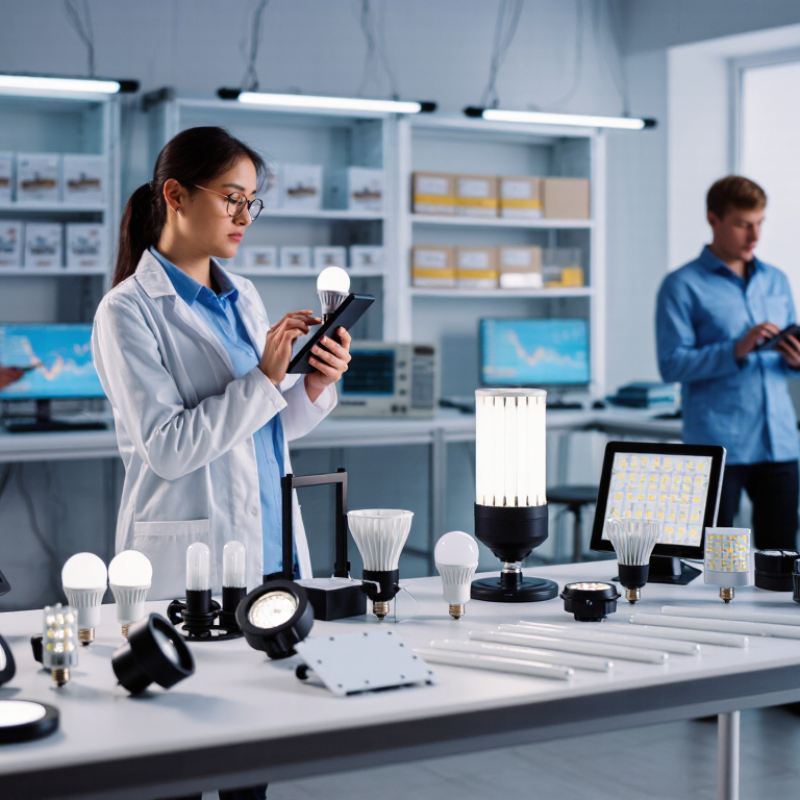
Why High Quality LED Lighting Needs Certifications

What LED Lighting Certifications Represent

What LED Lighting Certifications Represent

A certification represents evidence that an LED product has been assessed against defined safety or performance requirements. Depending on the scheme, testing may examine electrical insulation, temperature rise, light output, or electromagnetic interference. These checks matter in ordinary settings: a recessed fixture above a warm ceiling cavity faces different conditions from a desk lamp used for several hours.

A certification mark is not just decoration. It points to a documented process, often involving testing by an independent laboratory or review of manufacturing controls. The exact scope matters. One mark may address electrical safety, while another evaluates efficiency or light quality. A mark does not automatically prove that every product feature was tested.

Details count.

For buyers, the product label and supporting report can clarify what was assessed and under which standard. Look for the model number, rated voltage, and any stated operating limits. A certified fixture still needs the right dimmer, enclosure, and installation conditions. Certification cannot promise a specific lifespan or perfect performance in every building. It does offer a useful, checkable basis for comparison—though interpreting the paperwork can take a little patience.

How Certification Standards Evaluate LED Products

Certification standards examine more than whether an LED turns on. Photometric tests measure light output, beam distribution, and color temperature under stated conditions. A laboratory can compare these readings with product data and reveal meaningful differences. Color rendering tests indicate how familiar objects may look beneath the light. Small shifts matter.

Electrical and thermal checks assess insulation, leakage current, heat buildup, and component stability. These tests can expose risks that a brief showroom demonstration will miss. Electromagnetic compatibility testing checks whether a fixture creates or suffers interference during normal use. Some certification programs also assess efficiency and performance after extended operating cycles. Test conditions matter.

A certificate is useful only when its scope matches the exact product and configuration being considered. Changing a driver, lens, or operating temperature can alter results, so reports deserve careful reading. Buyers should verify the testing body, applicable standard, model number, and report date. Laboratory conditions cannot reproduce every ceiling, dimmer, or dusty workshop. That limitation is easy to overlook, even for experienced buyers. A loose terminal or blocked ventilation can still shorten service life.

Why High Quality LED Lighting Needs Certifications - How Certification Standards Evaluate LED Products

Standard or Evaluation Method What It Evaluates Typical Evaluation Areas What It Helps Verify Scope and Important Note
IEC 60598-1 General safety requirements for luminaires. Electrical construction, insulation, earthing, temperature, mechanical strength, and resistance to fire and electric shock. Whether a luminaire meets defined safety requirements when assessed for its intended use. Used with applicable part-specific requirements. The exact standard and edition depend on the product and market.
UL 1598 Safety of luminaires for the North American market. Construction, wiring, grounding, temperature, insulation, and mechanical and electrical hazards. Whether a covered luminaire has been evaluated against the applicable safety requirements. Applies to covered luminaires; it is not a universal requirement for every LED product or market.
UL 8750 Safety requirements for LED equipment used in lighting products. LED power sources, modules, wiring, insulation, temperature, and electrical hazards. Whether covered LED components or equipment meet applicable safety criteria. Often used alongside end-product requirements. Component evaluation alone does not establish that a finished luminaire complies.
IEC 61347-2-13 Safety of electronic controlgear for LED modules. Electrical insulation, abnormal operation, temperature, protection against electric shock, and controlgear construction. Whether covered LED controlgear meets relevant safety requirements. Read together with the applicable general requirements in IEC 61347-1.
IEC 62031 Safety requirements for LED modules used for general lighting. Module construction, electrical connections, insulation, temperature, and protection from hazards. Whether a covered LED module meets specified safety requirements. Module compliance does not by itself certify the complete luminaire or its installation.
IEC 62471 Photobiological safety of lamps and lamp systems. Optical radiation hazards, including ultraviolet, visible, and infrared exposure under defined measurement conditions. The assessed photobiological risk classification and relevant exposure information. Risk assessment depends on the product, measurement conditions, and intended use; it is not a general electrical-safety certification.
IEC 60529 Ingress protection (IP) provided by an enclosure. Protection against access to hazardous parts, solid foreign objects, and water, according to the claimed IP code. Whether the tested enclosure meets the specified protection level under the prescribed tests. An IP rating applies to the tested configuration and conditions; it does not automatically establish durability in every environment.
CISPR 15 Radio-frequency disturbance characteristics of electrical lighting and similar equipment. Conducted and radiated emissions, using applicable limits and test methods. Whether emissions from covered lighting equipment meet applicable electromagnetic compatibility requirements. Applicable limits and procedures depend on product type, configuration, and the relevant regulatory framework.
IEC 61547 Electromagnetic immunity requirements for general lighting equipment. Responses to specified electromagnetic disturbances, such as electrostatic discharge, electrical fast transients, and surges. Whether the equipment maintains the required performance during defined immunity tests. Immunity testing complements emissions testing; it does not replace electrical-safety evaluation.
IEC 61000-3-2 Limits for harmonic current emissions from equipment connected to public low-voltage systems. Harmonic current levels under specified operating and test conditions. Whether covered equipment meets the applicable harmonic-current limits. Applicability depends on equipment classification, rated input, and the standard’s scope and exclusions.
IES LM-79 Measurement of electrical and photometric performance for solid-state lighting products. Input power, luminous flux, efficacy, chromaticity, and other reported photometric characteristics. Consistent laboratory measurement results for the tested product and operating conditions. A measurement method, not a product certification or pass/fail quality label.
IES LM-80 and TM-21 LED package, array, or module lumen-maintenance data and projections. LM-80 measures light-output maintenance over time under specified conditions; TM-21 provides a method for projecting lumen maintenance from those data. Evidence used to estimate long-term lumen maintenance for the tested LED source. These methods do not directly establish the lifetime of a complete luminaire or guarantee an individual product’s service life.
Energy-efficiency programs and market requirements Product energy performance against defined program or regulatory criteria. Depending on the applicable program: efficacy, light output, color characteristics, dimming, power quality, or product reporting. Whether a product meets the stated efficiency or performance criteria for that program or jurisdiction. Program qualification is distinct from safety certification. Requirements vary by product category, market, and current program rules.

Which Safety and Performance Risks Certifications Address

A certification mark matters because an LED fixture connects to mains power and produces heat for hours. Independent safety testing can assess insulation, grounding, wiring, and temperature rise, reducing risks of electric shock and fire. Some programs also evaluate photobiological safety and flicker; coverage varies by standard. Check what the certificate actually covers. A label alone does not prove every hazard has been tested.

Performance claims need evidence, too. The U.S. Department of Energy reports that LEDs use at least 75% less energy and can last up to 25 times longer than incandescent lighting. Those advantages depend on real output, power use, color consistency, and thermal control—not just packaging claims. IES LM-79 provides methods for measuring solid-state lighting performance, while LM-80 and TM-21 address LED light-source maintenance and projected life. Small details matter: a warm ceiling cavity or incompatible dimmer can change operating conditions. Certification cannot guarantee identical results in every installation, and projected lifetime is not the same as a fixture’s guaranteed service life. That distinction deserves attention.

How Certifications Support Regulatory Compliance

Why High Quality LED Lighting Needs Certifications

Certification helps buyers verify that an LED product has been tested against relevant safety, electromagnetic compatibility, and energy-performance requirements. This matters because a fixture may look compliant while its driver, wiring, or label tells a different story. Requirements also vary by market and product category. A certificate is useful evidence, not automatic approval for every installation.

Energy claims deserve careful checking. The U.S. Department of Energy’s Energy Saver guidance says LEDs use at least 75% less energy and can last up to 25 times longer than incandescent lighting. Those figures describe potential benefits, not a guarantee for every lamp or operating condition. Recognized test reports help regulators and purchasers compare documented performance with product labels. They also make it easier to trace a model when a shipment, inspection, or warranty question arises. Paperwork can still be incomplete.

Tips: Check that the certificate lists the exact model and driver, not just a product family. Confirm the issuing body, test standard, and market scope. Keep copies with purchasing records. A neat label helps, but it cannot replace a valid test report.

How to Verify Certifications When Choosing LED Lighting

Why High Quality LED Lighting Needs Certifications

How to Verify Certifications When Choosing LED Lighting

A certificate is useful only when it matches the exact light you plan to buy. Check the certification body’s public directory, not just a logo printed on a box. Search the model number, including suffixes, and confirm the product type, operating voltage, and certification status. Small details matter. A certificate for a similar-looking fixture may cover different components or conditions.

The U.S. Department of Energy’s 2019 Energy Savings Forecast of Solid-State Lighting projected annual savings of 569 terawatt-hours by 2035 from LED adoption. That projection depends on products delivering dependable performance. For safety, check that the listing covers the complete luminaire and its intended installation. For performance claims, request an independent LM-79 test report for measured light output and efficacy. LM-80 and TM-21 support claims about LED-package lumen maintenance; they do not certify an entire fixture’s lifetime.

Ask for the certificate number, issuing body, applicable standard, and a current test report. Then verify each item with the issuer. A seller’s PDF may be outdated. I still double-check. Also compare the report’s model and test conditions with the product label; even a small model-code difference deserves a question. Certification is strong evidence, not a substitute for careful verification.

FAQS

What do LED certification tests evaluate?

They examine light output, beam spread, color temperature, insulation, leakage current, heat, and component stability. Small shifts matter. Testing checks more than whether the lamp turns on.

Why are thermal and electrical tests important?

They can reveal overheating, weak insulation, loose connections, or unstable components. A showroom test may miss these problems. Blocked ventilation can still shorten service life.

Does a certificate cover every version of a lighting product?

No. It should match the exact model, driver, lens, voltage, and configuration. A similar-looking fixture may use different components. That difference matters.

How can buyers verify an LED certificate?

Check the issuer’s public directory instead of trusting a printed logo. Search the complete model number, including suffixes. Verify the product type, voltage, standard, and current status.

What information should a valid report include?

Look for the certificate number, issuing body, test standard, model number, and report date. The report should also state its market scope. Paperwork can be incomplete.

Do energy-saving claims apply to every LED product?

No. Published energy and lifespan figures describe potential performance under stated conditions. Operating temperature, usage time, and installation quality can change results. The label may sound more certain than reality.

What do independent photometric reports show?

They can document measured light output, efficiency, beam distribution, and color performance. These readings help compare product claims with laboratory results. Conditions still matter.

Do LED-package maintenance reports certify an entire fixture’s lifetime?

No. They mainly support lumen-maintenance claims for LED packages. They do not fully evaluate the driver, housing, wiring, or installation. I would not treat them as a complete lifetime promise.

Can certification guarantee safe performance in every installation?

No. Laboratory testing cannot reproduce every ceiling, dimmer, dusty workshop, or blocked air path. Installation details still matter. Certification supports careful decisions, but it does not replace inspection.

Conclusion

High-quality LED lighting certifications show that a product has been assessed against recognized safety, performance, and quality requirements. Testing may examine electrical and fire safety, light output, color consistency, energy efficiency, durability, and electromagnetic compatibility. These checks help identify risks such as overheating, unreliable operation, misleading performance claims, or interference with nearby equipment. Certification can also support compliance with applicable rules in the markets where a product is sold, although requirements may differ by region and product type.

When choosing lighting, ask, “What certifications should high-quality LED lighting have?” The answer depends on the intended use and location, so check which standards apply and whether the product’s documents match its exact model. Verify certificates or test reports through the issuing organization where possible, and compare the listed product details with the packaging and supplier information. Careful verification helps buyers make informed choices and select lighting that is safer, dependable, and suited to its intended application.

Mason

Mason

Mason is a seasoned marketing professional with a deep expertise in the company's offerings and a passion for driving brand awareness. With a strong background in digital marketing strategies, he has an innate ability to connect with diverse audiences and effectively communicate product benefits.......