Choosing an intelligent stage lighting system can shape how guests remember an event. A product may look impressive online, yet fail in a crowded venue. From practical event experience, smaller fixtures sometimes outperform larger units when placement, control, and room height are considered together. The right choice begins with the event’s purpose, not a shopping list. No choice is perfect.
Why do events need intelligent stage lighting systems? They help teams adjust color, brightness, movement, and timing from a central console. This control supports speeches, concerts, exhibitions, conferences, and product launches. It also reduces manual changes during a busy show. Better coordination matters.
A reliable selection process should examine DMX or Art-Net compatibility, fixture output, beam angle, color rendering, and flicker performance. Check whether the system works with the venue’s power supply and control infrastructure. Confirm noise levels before using fixtures near presenters or recording microphones. Outdoor events require suitable weather protection, while indoor installations still need proper ventilation. Safety certifications and manufacturer documentation should be verified, not assumed. An experienced lighting designer can test a sample fixture, measure coverage, and identify harsh shadows before the event begins.
Budget remains important, but the cheapest system may create higher rental, labor, or replacement costs later. I have also seen teams overestimate their programming skills. That mistake is avoidable. Request training, backup plans, and technical support from established suppliers. Review the design after a rehearsal. Real venues often reveal problems that specifications cannot. A thoughtful system should deliver visual impact, stable operation, and safer working conditions without distracting from the event’s main message.
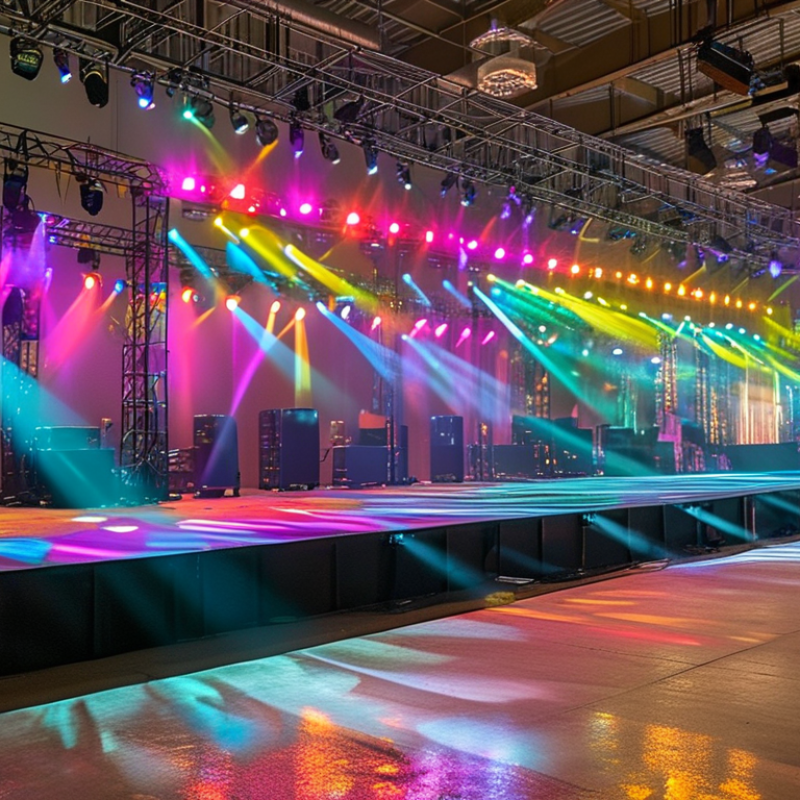
Before choosing an intelligent stage lighting system, measure the venue, not just the stage. A 300-seat hall needs different beam angles and fixture counts than a 3,000-seat arena. The Event Industry Council reports that business events attract about 1.5 billion participants worldwide each year. Audience scale matters. Wide coverage, readable faces, and low-glare positions protect the experience. Walk through the rear rows. Can viewers see expressions clearly?
Power planning is equally practical. The U.S. Department of Energy reports that LED lighting uses at least 75% less energy than incandescent lighting and lasts up to 25 times longer. Still, efficient fixtures do not remove electrical limits. Check circuits, distribution boards, rigging points, and backup power. A system with moving fixtures, video surfaces, haze, and audio control requires careful load calculations. Show complexity also changes the control requirement. A simple speech may need timed fades. A concert may require networked control, position presets, sensor feedback, and rapid cue changes. More intelligence can mean more failure points. I sometimes specify too much automation, then regret the unused complexity.
Tips: Draw the audience sightlines first. Record every circuit load. Request a lighting plot and cue list before purchasing. Test the system in the actual venue, because reflective walls and low ceilings can defeat a perfect specification. Leave manual control available. Technology should support the show, not become the show.
They usually consume less power and produce less heat. That reduces cooling demands in crowded venues. They also need fewer lamp replacements. Efficiency can look misleading. Measure real output at the chosen color temperature.
A 10-degree beam creates sharp aerial effects through haze. A 25-degree beam can cover performers more evenly. A 50-degree beam suits scenic washes and smaller stages. Narrow beams may leave faces unevenly lit. Check photometric data, not only lumen claims.
No. CRI is useful, but incomplete. A fixture rated CRI 90 may render saturated red poorly. Review R9 values and TM-30 results. Test skin tones, white costumes, and deep blue. Paper ratings can disappoint.
RGBW systems often create cleaner white light. RGBACL systems can provide broader color control. Compare output, color quality, and control needs. Test colors at several beam angles. One fixture rarely excels everywhere.
Use managed switches and separate lighting traffic. Plan IP addresses carefully. Avoid crowded wireless links for critical control. Measure response during a full-load rehearsal. Empty-venue tests are not enough.
Consider backup consoles, spare data paths, and isolated power circuits. Use dual network ports when genuine failover is supported. Remove cables during testing. Simulate switch failure and console changeover. Some redundancy is only cosmetic.
Include purchase price, energy use, repairs, transport, and technician time. Check expected service life and warranty conditions. Ask about repair procedures and replacement components. A cheaper fixture may cost more after six hours of operation. Showroom brightness proves little.
Choose fixtures with accessible filters and clear error reports. Keep spare cables, clamps, and control devices nearby. Inspect connections before every performance. Confirm load ratings, secure mounting, and cable protection. A qualified technician should inspect complex installations. Small checks matter.
Select equipment that can support more fixtures, zones, sensors, and control channels. Open communication methods may reduce future limitations. Expansion can still increase programming and maintenance work. I have seen teams buy functions nobody used. Plan for growth, but question every feature.
Why do events need intelligent stage lighting systems? They help organizers create dynamic, memorable experiences while adapting lighting to different venues, audiences, and production goals. The right system begins with evaluating venue size, available power, audience visibility, and show complexity. Fixture selection should consider LED efficiency, beam angles, color rendering index, and color-mixing capabilities to achieve consistent and expressive results.
Control and networking are equally important. DMX512-A provides a practical foundation for managing up to 512 channels, while RDM can support remote monitoring and configuration. For larger or more complex productions, Art-Net and sACN can distribute lighting data across networks, with redundancy and low latency improving reliability. Finally, decisions should account for total lifecycle value, including energy consumption, maintenance, safety, and future scalability. A carefully planned intelligent lighting system can reduce operating costs, simplify production management, and deliver dependable performance as event requirements grow.

 Senning Lights